

Designing ReachOut PeerChat for Safe, Youth-Led Mental Health Support

Deepend worked with ReachOut, young people, peer workers and clinical psychologists to research, design and build PeerChat. The anonymous service gives young people control over one-to-one conversations with trained peer workers.
Client: ReachOut
Industry: Healthcare, Mental Health, Not-for-Profit, Youth Services, Digital Health
Services: Human & Machine Experience Design; Digital Transformation & Strategy; Intelligent Platforms & AI Systems
Target Audiences: Young people who want non-clinical, personal and lower-barrier mental health support.
Year: 2023
“It was cool because I felt I was in control. We talked about ways that I could manage some of my feelings, and my peer worker shared what had worked for them in the past. It was such a good place to start for me so I could look out for myself better.”
Anonymous - PeerChat participant, 19
The mental health and wellbeing of young people is a major public health concern. Over 75% of mental health problems occur before the age of 25 and young people are the least likely age group to seek professional help.
There are numerous systemic barriers for young people seeking professional support. There’s an urgent need for early intervention, youth-centred services that respond to the increasing – and varying – pressures that young people today experience. We need new support models addressing young people’s needs and desirable futures.
Our research revealed young people needed accessible, non-clinical, and personal support. Working hand in hand with the ReachOut strategic design team we worked with them to support the research, evaluation, design and build of a Peer-2-Peer communication channel - PeerChat, as part of their business strategy to create more relevant and useful services for young people in need of support.
Overview
The Challenge
Young people face systemic barriers to professional help, while many mental health problems emerge before age 25.
Research showed that users wanted accessible, non-clinical and personal support from someone who would listen and validate their experiences.
The Opportunity
A one-to-one anonymous text service with trained peer workers could provide an earlier and more approachable entry point to support.
Co-design could make safety, emotional control and trust core product features rather than later additions.
Our Approach
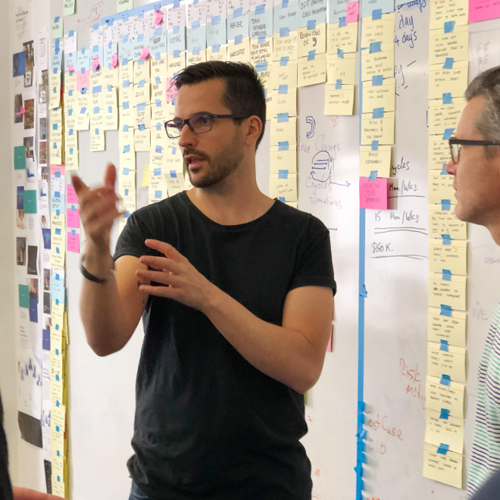
Deepend worked with ReachOut’s strategic design team, young people, peer workers and clinical psychologists across research, evaluation, service design and product development.
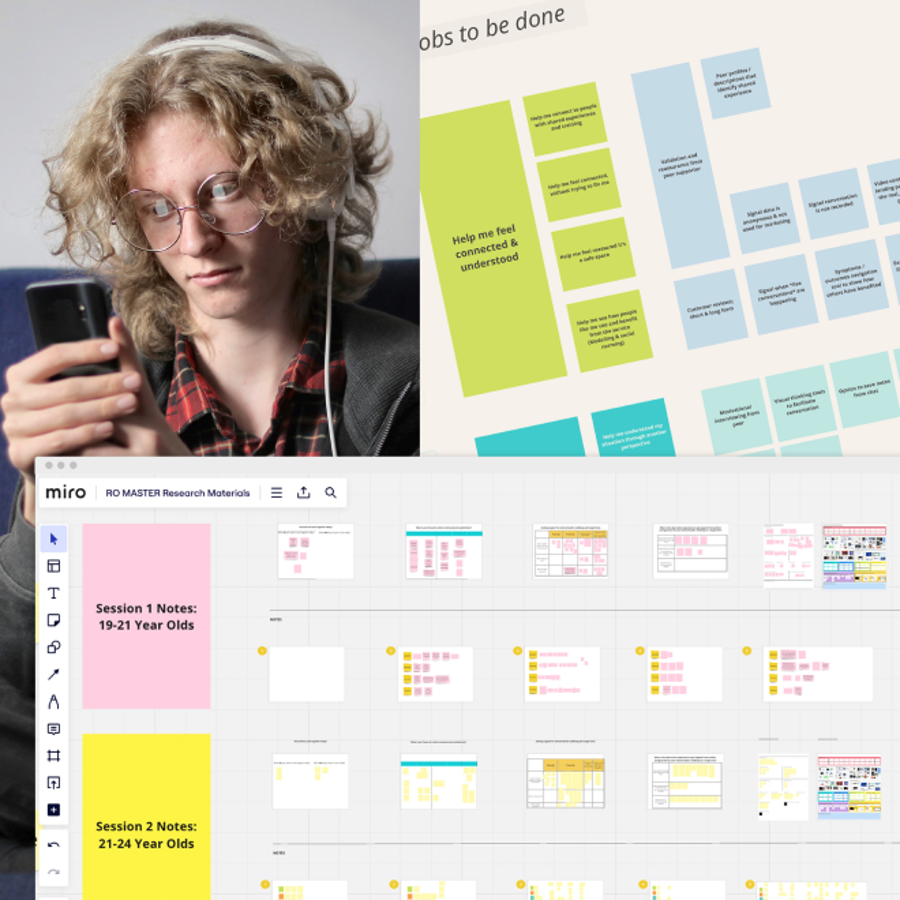
An online self-reflection experiment helped identify one-to-one peer chat as the preferred support model.
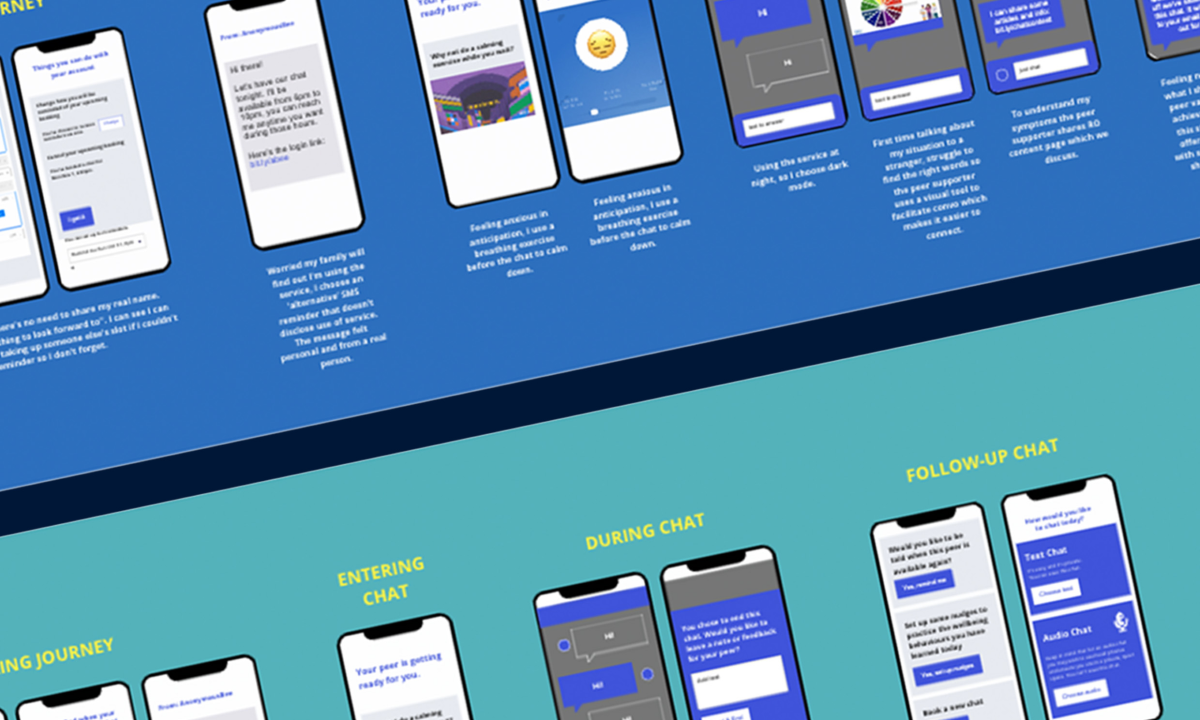
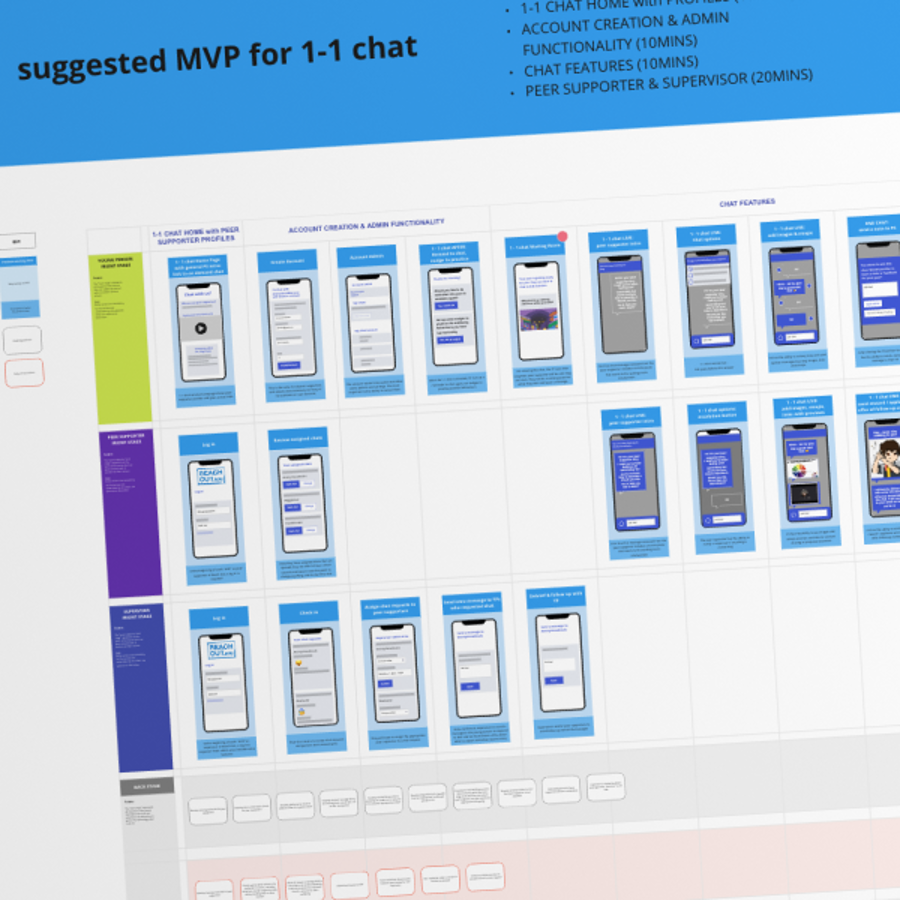
Blueprints for fast-tracking design
We created a product design blueprint where we combined service design with UX to move more quickly to the UI design stage.
What We Delivered
- Youth-centred research
- Online self-reflection experiment
- Service design
- Co-design with young people and experts
- Product design blueprint
- UX and UI design
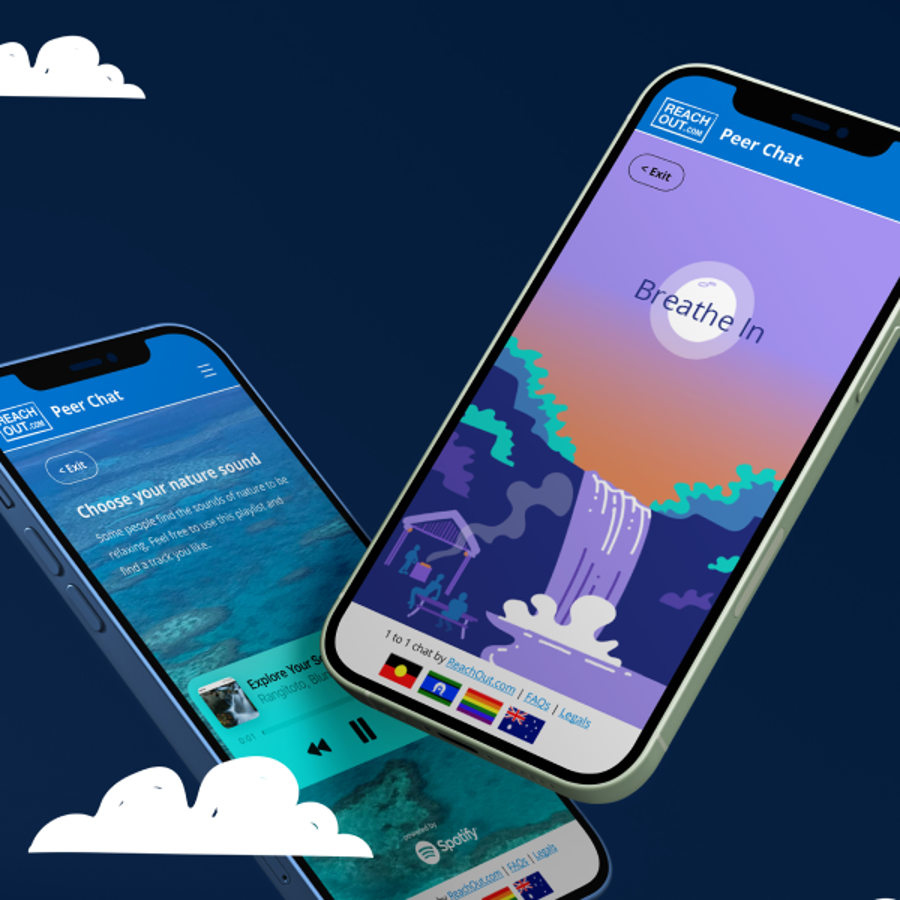
- Breathing exercise for wait states
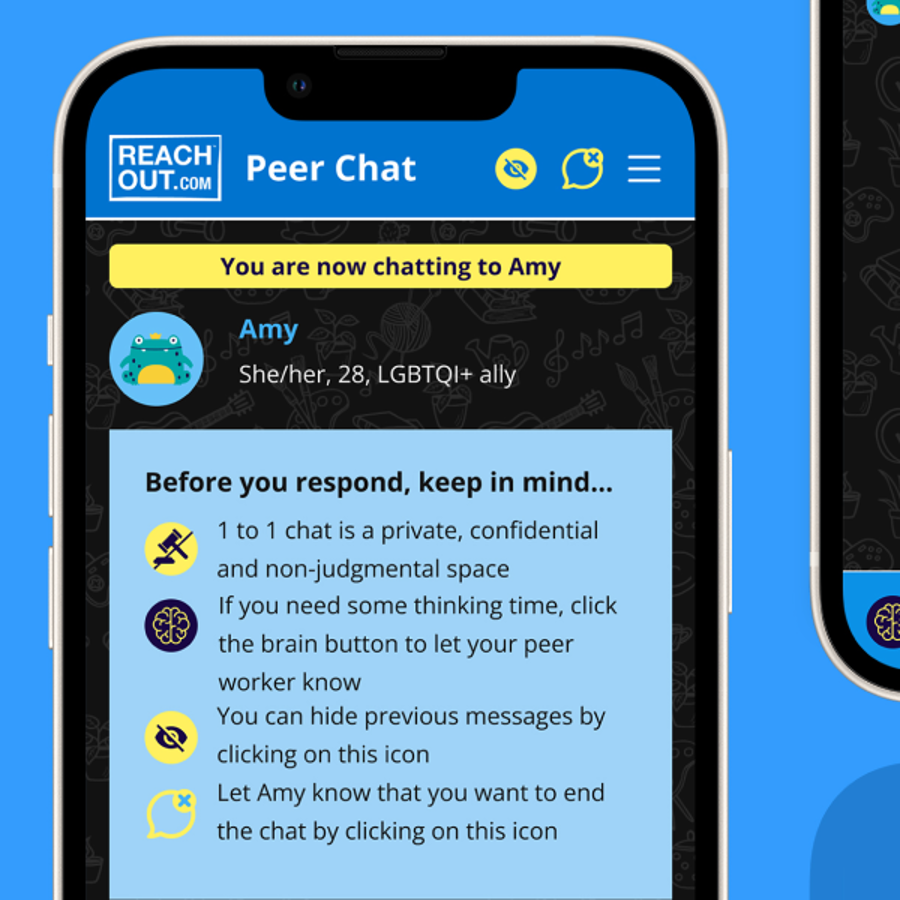
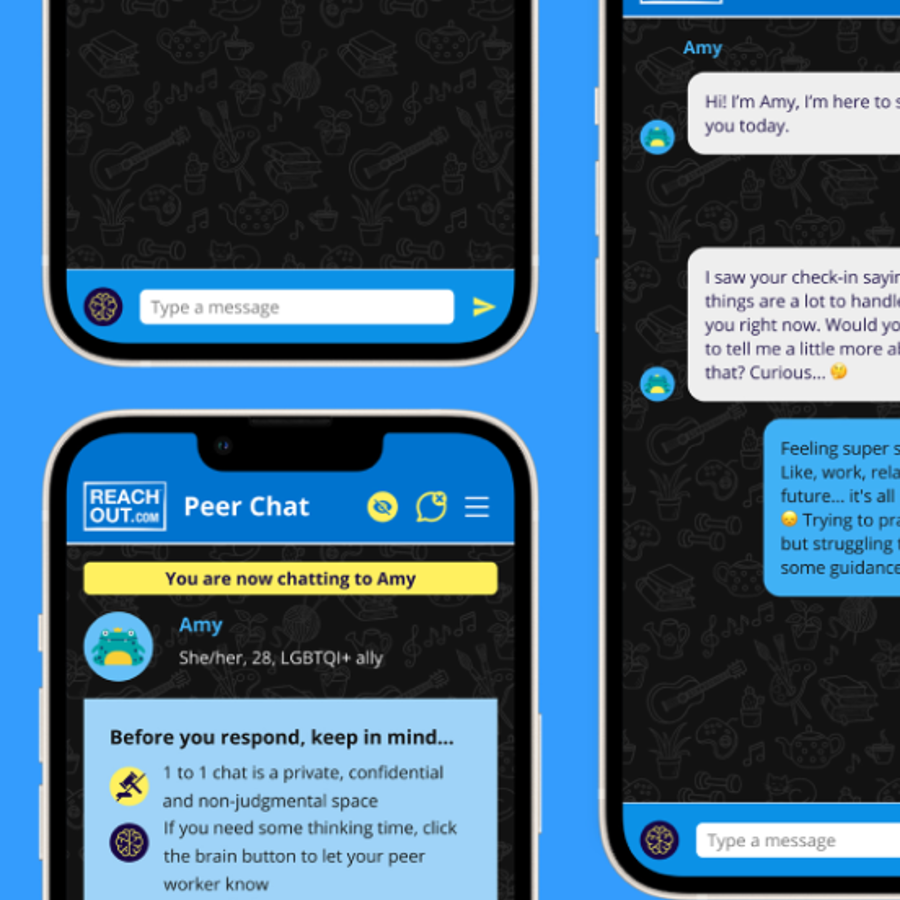
- Thinking-time control
- Anonymous text-chat experience
- Trigger-management features
- Platform build support
Impact
- 74–78% of young PeerChat users surveyed said they felt better and would recommend the service
- 82% of PeerChat users surveyed felt the service was trustworthy
- A user-controlled thinking-time feature reduced pressure to respond quickly
- A breathing exercise supported users experiencing anxiety while waiting
- Four 2023 design awards across Good Design and DIA categories
Value and Impact
2.5 million people
In the last 12 months (Australian user data for the 2023–24, financial year), turned to ReachOut services for mental health and wellbeing support
89% of users
of users of the moderated Online Community felt it was safe and 82% of users of ReachOuts PeerChat service felt it was trustworthy
80% of educators and health professionals
of educators and health professionals said ReachOuts schools content gave them greater knowledge of support strategies to use with young people
74% to 78% of young people
of young people aged 14–25 years who had used PeerChat in the past year said they felt better after they spoke with a peer worker and would recommend it to others

Problem & Insight
Young people were the least likely age group to seek professional help, despite high need for early intervention.
Research showed that being listened to and validated mattered more than a clinical-feeling interaction.
Strategy & Experience Design
The service was co-created with young people, peer workers and clinical psychologists.
A breathing exercise addressed anxiety while waiting, while the thinking-time button gave users control over conversation pace.
Technology & Delivery
A product design blueprint combined service design and UX to accelerate movement into UI design.
The anonymous text format supported reflection and made sensitive topics easier to discuss. Features also allowed potentially triggering previous messages to be hidden.
Results
Reported PeerChat outcomes included 82% trust and 74–78% of surveyed users feeling better and recommending the service.
The service received multiple 2023 design awards, including Good Design Gold and a DIA Interact award.







-

2024
Best in Class for Digital Design - Software & Apps
Sound Storm
-
2023
Digital Design - Apps & Software
ReachOut PeerChat
-

2023
Winner - Interact
ReachOut - PeerChat
-
2022
Digital Design - Web design & development
Royal Flying Doctor Service
-
2022
Digital Design - Web design & Development
Active Super
-

2022
Finalist for Digital Transformation Consultancy
B & T