

Transforming the Navitas Student Journey Through Research and Prototyping
Deepend used ethnographic research, stakeholder engagement and co-design to identify 19 student journey problems for Navitas and progress five concepts into prototype or feasibility stages
Client: Navitas
Industry: Education, Higher Education, International Education
Services: Digital Transformation & Strategy; Human & Machine Experience Design
Target Audiences: Domestic and international students moving through Navitas pathway programs, as well as internal teams responsible for student experience.
Year: 2023
Deep customer research and qualified user testing is absolutely key to finding the right problem.
Patrick McKibbin - Head of Customer Experience IT – Navitas
Overview
The higher education sector in Australia has grown at around 5% year-on-year since 2000 and now contributes $30 billion to the country’s GDP. One of the driving forces in this sector over the past two decades has been Navitas NVT (ASX), the Australian born, tertiary education provider.
Navitas provides ‘pathway’ programs for students to enter the established higher education system by fast-tracking their learning in smaller, more focused groups. These pathways are provided to both domestic and international students for higher education destinations here in Australia as well as the UK, USA and Canada.
As a true disrupter in this space, Navitas have an unrelenting passion for improving the student experience and a multi-disciplined approach to problem-solving that required us to join the team and help drive the ‘Digital Customer Experience Change Initiative’ set out by their CEO, David Buckingham.
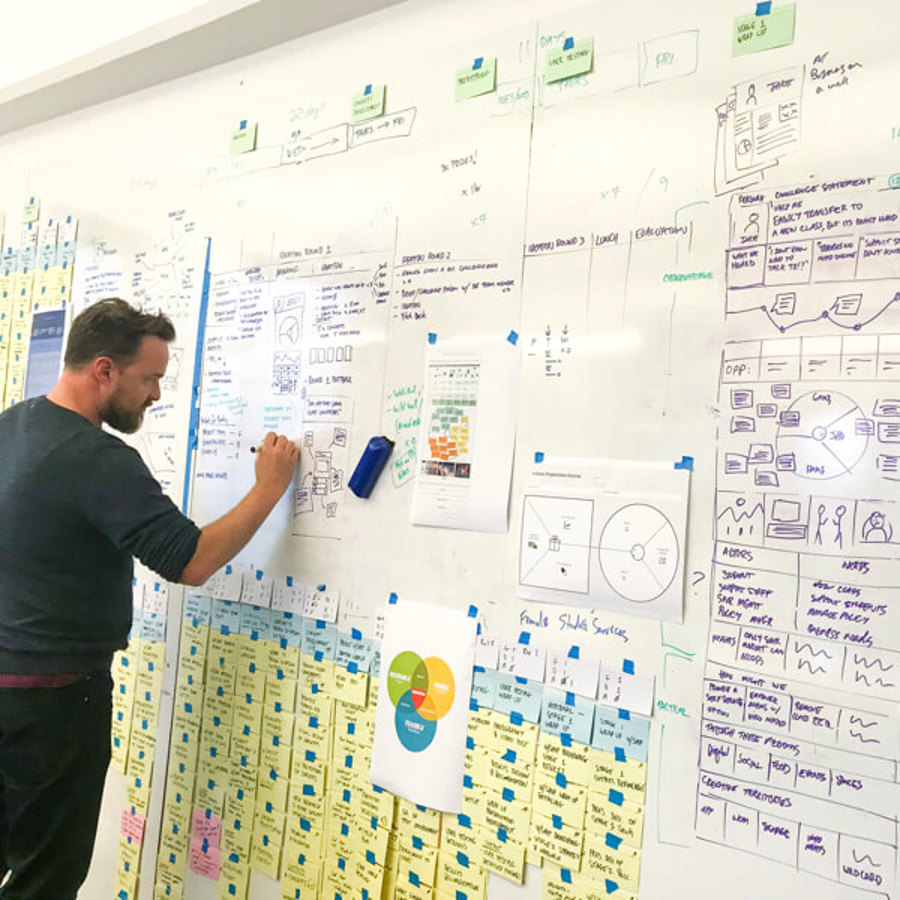
Deepend began with a multi-college design research phase combining data analysis, one-to-one interviews and ethnographic research.
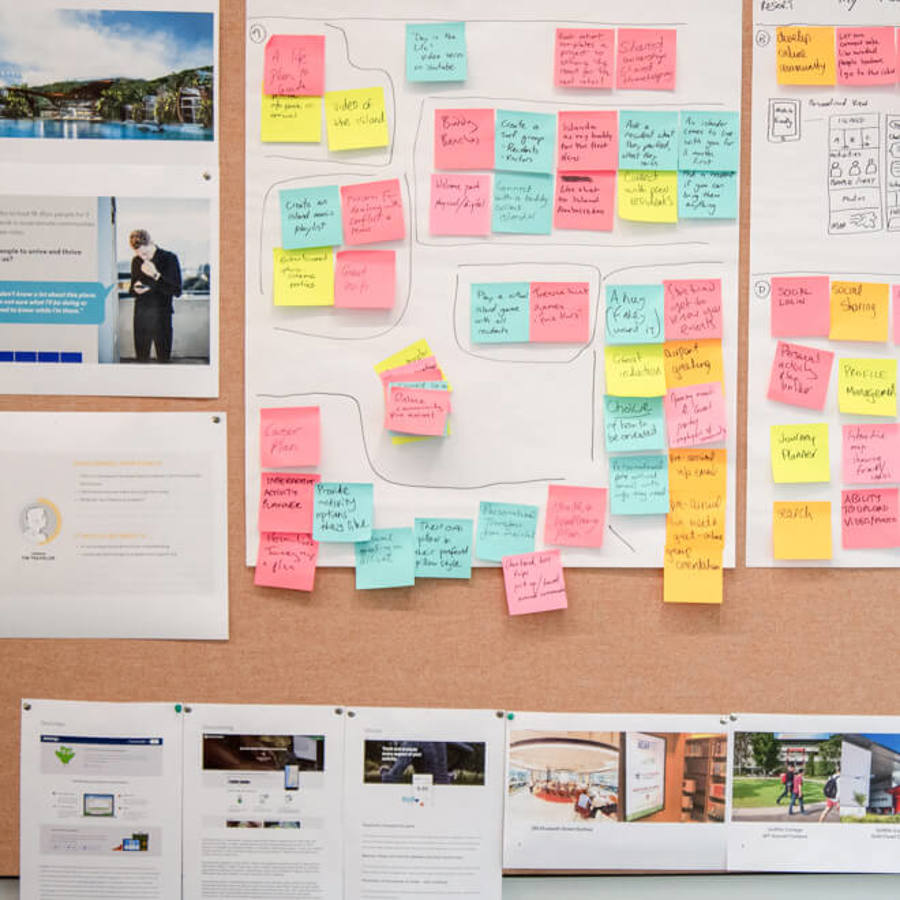
Insights were translated into problem statements, then taken through co-design workshops with students, stakeholders and subject matter experts before sentiment testing, feasibility assessment and prototyping.


What We Delivered
- Data analysis
- One-to-one interviews
- Ethnographic research
- Contextual interviews
- Student journey insight mapping
- 19 prioritised problem statements
- Co-design workshops
- Ideation and sentiment testing
- Feasibility assessments
- Customer testing
- Five live prototypes or prototype-stage concepts
Impact
- 70+ stakeholders engaged across the organisation
- 19 distinct student journey problem statements identified
- 5 concepts progressed into live prototype or feasibility stages
- Quick-win streams implemented immediately after sentiment testing
- Several prototypes progressed into pilots and broader business implementations

Problem & Insight
The Navitas student journey crossed multiple colleges, services and internal teams, creating a complex environment where symptoms could easily be mistaken for root problems.
Deepend used qualitative research to uncover deeper human insights and map the student touchpoints that mattered most.
Strategy & Experience Design
Research findings were synthesised into clear problem statements that gave the wider program focus and reduced the risk of solving the wrong problem.
Co-design workshops brought together students, project teams, stakeholders and subject matter experts to develop ideas that could be assessed for desirability, feasibility and viability.
Technology & Delivery
Deepend used a structured Double Diamond process, moving from divergent research and ideation into convergent problem definition and prototyping.
Selected concepts progressed through technical feasibility assessment, deeper qualitative research, customer testing and product pilots before broader implementation.
Results
The program engaged more than 70 stakeholders, identified 19 distinct areas of improvement and progressed five concepts into prototype or feasibility stages.
Some quick wins were implemented immediately, while several technical prototypes later developed into pilots and scaled initiatives across the broader business.






-

2026
Winner Web Design and Development
Adelaide Airport
-
2024
Best in Class for Digital Design - Software & Apps
Sound Storm
-
2023
Digital Design - Apps & Software
ReachOut PeerChat
-

2023
Winner - Interact
ReachOut - PeerChat
-
2022
Digital Design - Web design & development
Royal Flying Doctor Service
-
2022
Digital Design - Web design & Development
Active Super
-

2022
Finalist for Digital Transformation Consultancy
B & T
Frequently Asked Questions
How did Deepend improve the Navitas student journey?
Deepend used multi-college research, data analysis, one-to-one interviews and ethnographic studies to understand student needs and identify 19 distinct areas for improvement across the digital customer experience.
How many stakeholders were involved in the Navitas transformation program?
More than 70 stakeholders were engaged across Navitas. The program brought together students, project teams, subject matter experts and internal stakeholders to align priorities and test potential solutions.
What research methods did Deepend use for Navitas?
Deepend combined data analysis with ethnographic research, one-to-one interviews, contextual interviews, journey insight mapping and co-design workshops to build a deeper understanding of student needs.
How many prototypes were created for the Navitas student experience?
Five concepts were taken into live prototype or feasibility assessment stages. The case study states that several prototypes later progressed into pilots and scaled initiatives.
Why were problem statements important in the Navitas project?
The research was synthesised into 19 clear problem statements. These helped Navitas focus a complex transformation program on validated customer problems before moving into ideation, feasibility testing and implementation.