

Helping International Students Arrive Ready for College Life

Deepend designed Orientation Go for Navitas, a gamified mobile onboarding app that helped international students prepare for campus life, with more than 50% pilot uptake and strongly positive qualitative feedback.
Client: Navitas
Industry: Education, Higher Education, International Education
Services: Digital Transformation & Strategy; Human & Machine Experience Design
Target Audiences: International students preparing to start study at Navitas colleges, particularly those adapting to a new country, campus and social environment.
Year: 2019
We discovered that many international students suffer their in-college anxieties in silence. It’s not until the third or fourth week that they arrive at some form of student councillor to raise the issues, which in many cases is too late to allay their concerns.
Lucy Blakemore - Head of Customer Research and Insights, Navitas.
Overview
With a student base of over 70,000 each year, Navitas is one the world’s largest providers of tertiary education services. Successfully onboarding and orienting these students is critical to the majority of them successfully matriculating past the crucial census stage of education and through their chosen course of study.
Having conducted in-depth research with existing students, many of them from international backgrounds, we discovered that many have accumulating anxieties and fears that detract from them having positive student experiences. These are as broad as social anxieties regarding how to involve themselves in campus life to simply struggling to navigate their way around a new campus in a new country.
Often with an extended period between receiving an offer and actually arriving for their first day on campus, many of these anxieties grow and students begin their critical initial period of study in a less than positive mindset. It is often not until they present themselves to a Student Support person that these sorts of issues are expressed, quite often too late to remedy and set the student on a more successful path.
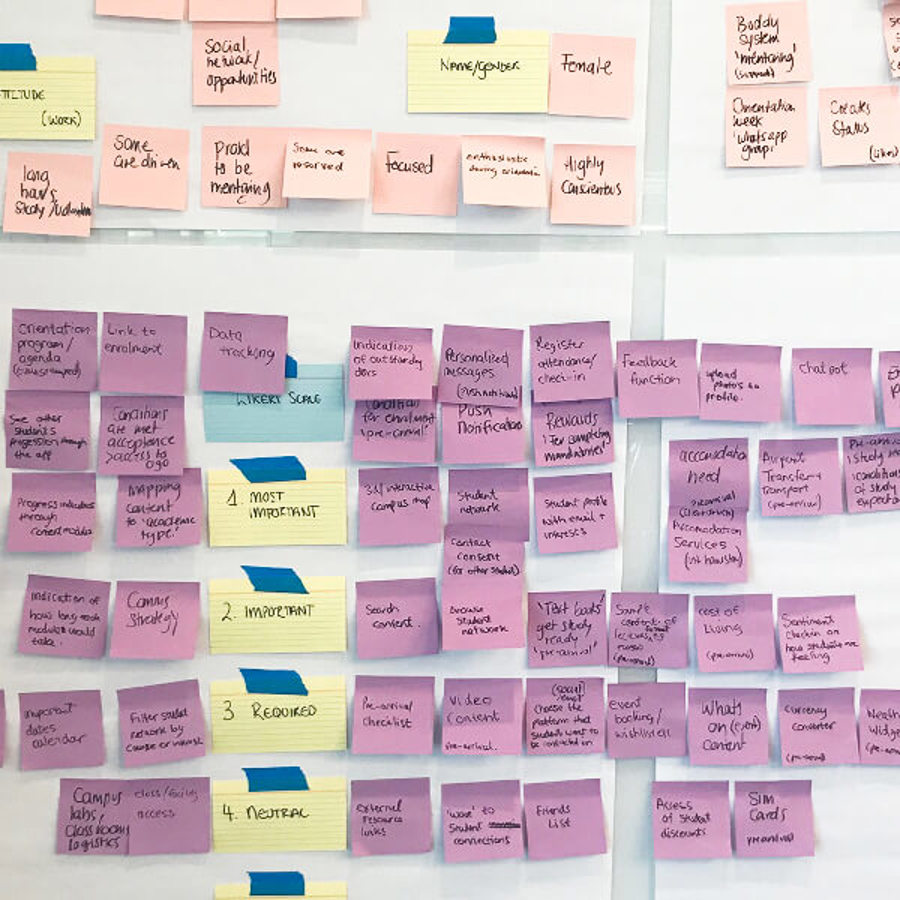
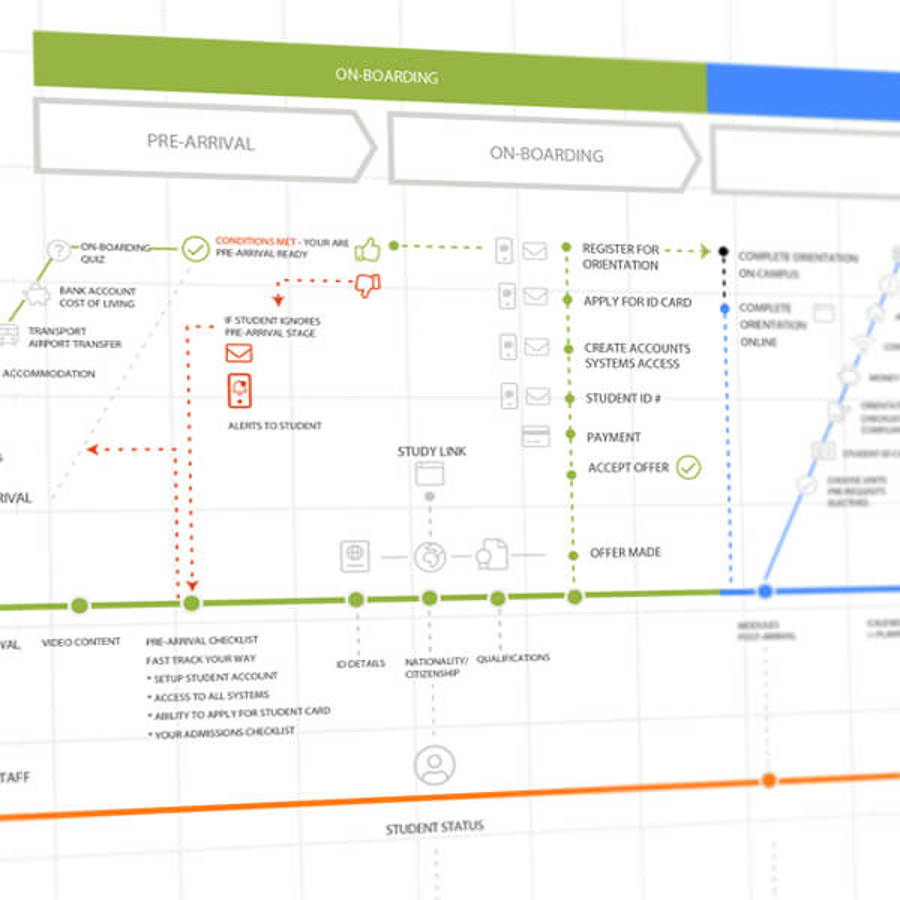
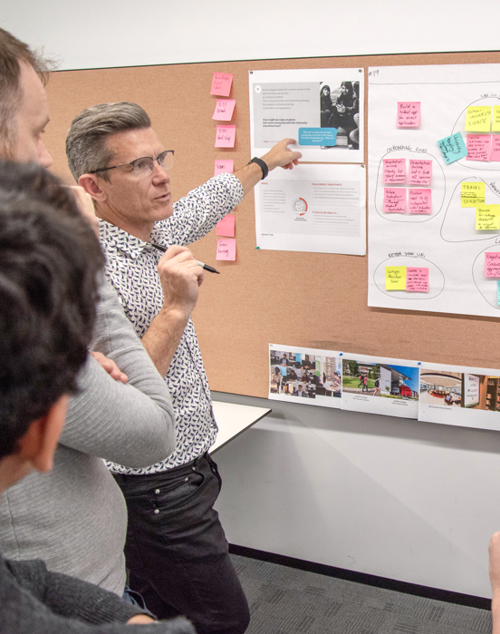
Deepend used customer journey mapping and qualitative student research to shape the app around three content pillars: building connections, understanding the location and campus, and completing basic administration tasks.
The experience used gameful progression, non-linear learning and social referencing to encourage completion without forcing students through a rigid sequence.
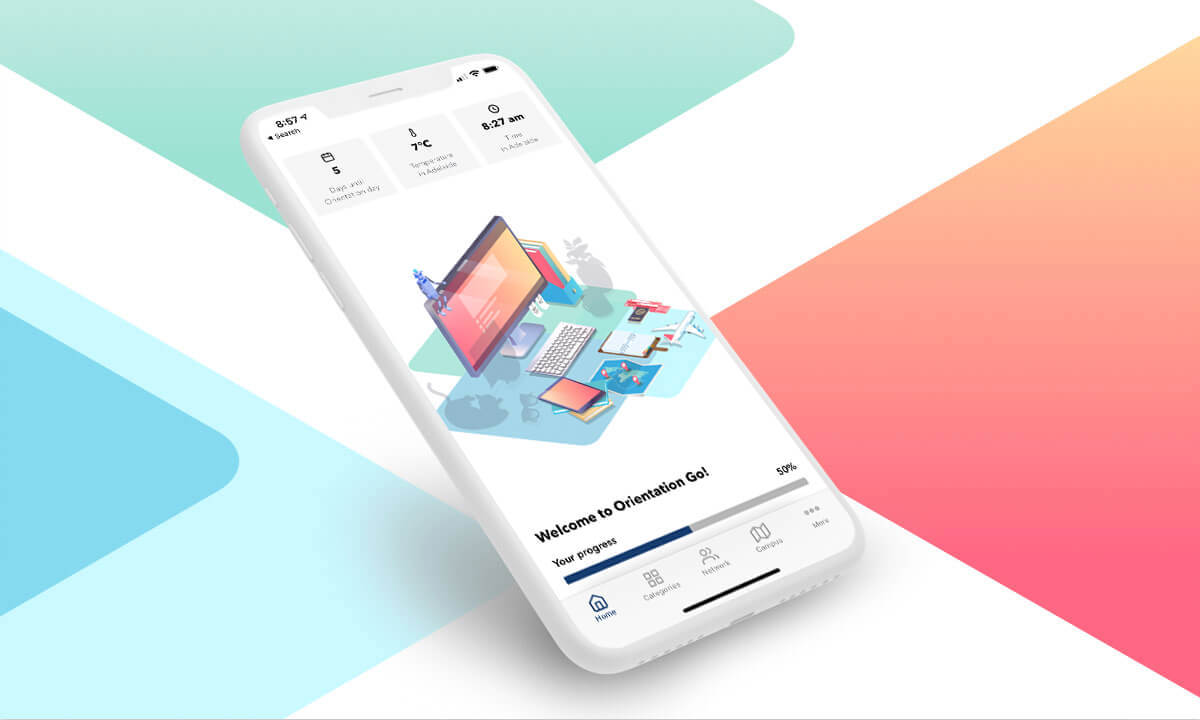
Gameful design
The design of the application grows and expands as the user completes various tasks, with icons and illustrations building as they progress through each key section. This rewards and gently persuades users to complete each section in turn.
The Challenge
Navitas research found that many international students experienced social, practical and campus-related anxieties before and during their first weeks of study. These concerns were often raised only after several weeks, when students finally approached support staff.
Because there can be a long gap between receiving an offer and arriving on campus, students needed support before those concerns became barriers to a positive start.
The Opportunity
A mobile experience could begin orientation before students arrived in Australia, helping them build confidence, understand their new environment and complete important preparation tasks.
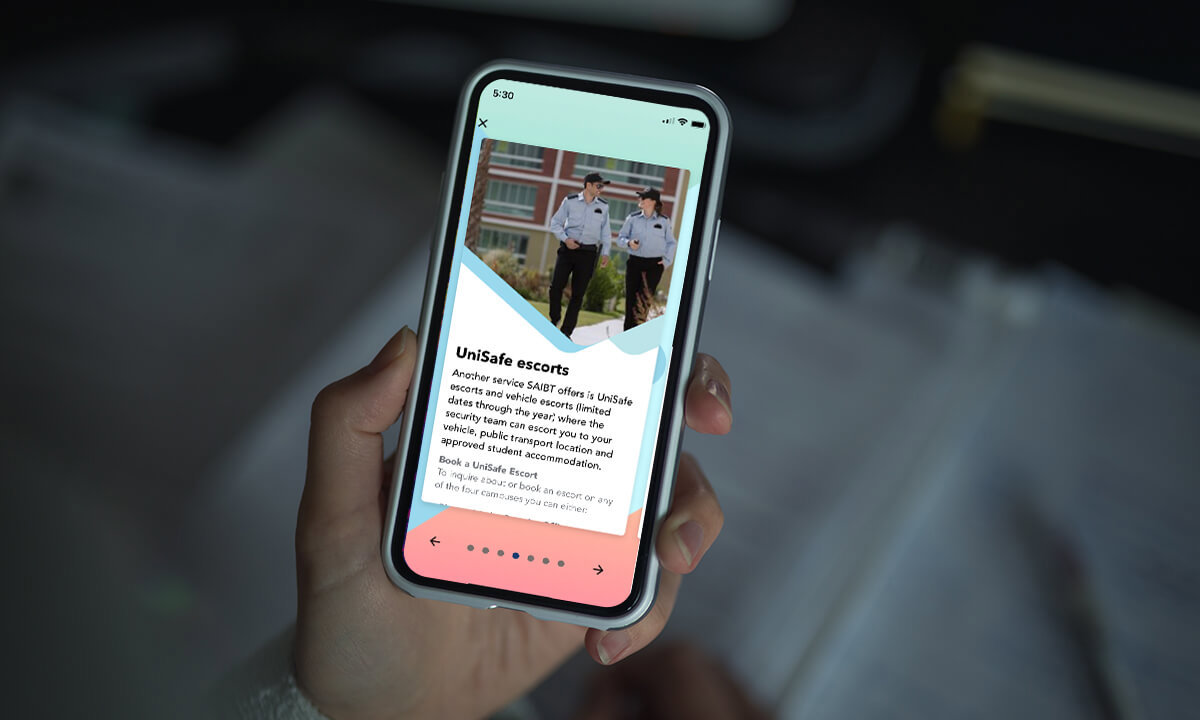
Non-linear learning
Core content pillars structured around key insights regarding anxieties raised by students. Students can explore and undertake each section in a non linear way, allowing them to allay specific concerns in their own preferred order.
What We Delivered
- Student research and customer journey mapping
- Pre-orientation experience strategy
- Content strategy across three core pillars
- Mobile UX and UI design
- Gameful interaction design
- Non-linear learning structure
- Social referencing features
- iOS pilot application
- Decoupled platform architecture
- Modular object-oriented codebase
- Pilot launch at SAIBT College in Adelaide
Impact
- More than 50% uptake during the pilot
- Qualitative feedback was overwhelmingly positive during orientation week
- Many students reported that the app positively affected their entry into university in Australia
- Decoupled architecture enabled reuse of existing digital experience components
- Modular codebase created a path to Android and additional college rollouts
Problem & Insight
Research showed that student anxieties were not limited to academic preparation. Social integration, unfamiliar surroundings and basic administration could all undermine confidence before classes began.
The key insight was that support needed to start before arrival, rather than waiting until students presented to support services after problems had accumulated.
Strategy & Experience Design
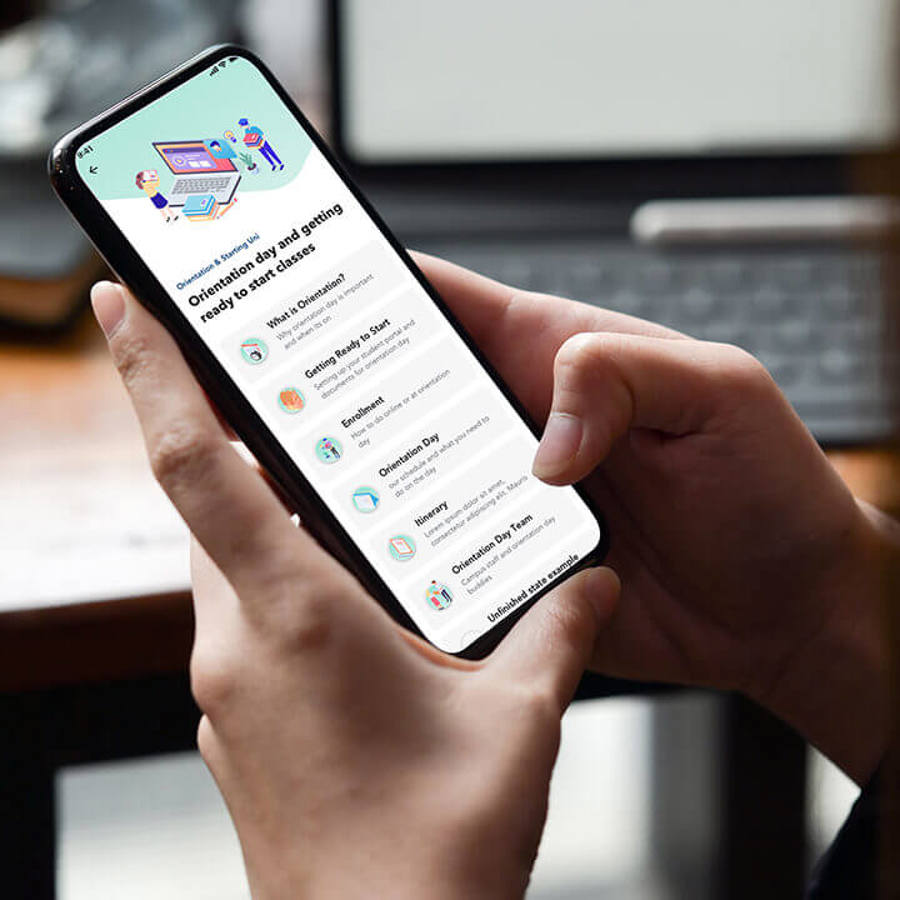
Orientation Go structured content around three needs: connection with other students, familiarity with the campus and location, and practical preparation tasks.
The interface progressively filled with icons and illustrations as users completed activities, creating a sense of reward. Students could also move through content in their own order, giving them control over which concerns to address first.
Social referencing gently introduced students to peers arriving at the same time, helping reinforce that they were not navigating the transition alone.
Technology & Delivery
The pilot focused initially on iOS. A decoupled architecture allowed the team to reuse elements from other Navitas digital initiatives, improving delivery efficiency.
The codebase was developed in a modular, object-oriented way so the experience could later be adapted for Android and additional college rollouts.
Results
The pilot launched at SAIBT College in Adelaide and achieved more than 50% student uptake. Qualitative feedback during orientation week was strongly positive, with many students saying the app improved their entry into university in Australia.
The project also created a scalable mobile foundation that could be reused across platforms and colleges as Navitas expanded its broader Digital Customer Experience program.
Frequently Asked Questions
What is Navitas Orientation Go?
Orientation Go is a mobile app designed by Deepend to help Navitas students prepare for college life before arriving on campus. It guides users through social, location and administration activities linked to common pre-arrival concerns.
Why did Navitas create a student orientation app?
Research showed that many international students experienced anxiety about campus life, social connection and practical tasks but often did not seek support until several weeks into study. Orientation Go was designed to provide support earlier.
What results did the Orientation Go pilot achieve?
The pilot achieved more than 50% uptake. Qualitative feedback gathered during orientation week was overwhelmingly positive, with many students reporting that the app had a positive impact on their entry into university in Australia.
How did gamification work in Orientation Go?
The app used gameful design to reward progress. Icons and illustrations built up visually as students completed tasks, encouraging them to continue through the orientation experience without forcing a fixed sequence.
How was Orientation Go designed to scale?
The initial pilot focused on iOS, but Deepend used a decoupled architecture and modular object-oriented codebase so the experience could be adapted for Android and additional college rollouts more efficiently.







-

2024
Best in Class for Digital Design - Software & Apps
Sound Storm
-
2023
Digital Design - Apps & Software
ReachOut PeerChat
-

2023
Winner - Interact
ReachOut - PeerChat
-
2022
Digital Design - Web design & development
Royal Flying Doctor Service
-
2022
Digital Design - Web design & Development
Active Super
-

2022
Finalist for Digital Transformation Consultancy
B & T