

From User-Centred Design to Human and Machine Experience Design

Traditional UX design begins with understanding human needs, behaviours and motivations. These principles remain essential, but designers must also consider how machines interact with the same digital environments.
AI agents may access information through search results, structured data, APIs or browser interfaces. They cannot be assumed to follow prescribed journeys or interpret visual hierarchy as people do.
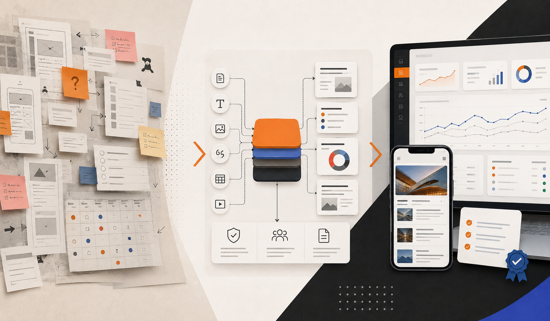
This requires a broader approach. Alongside helping people navigate an experience, we need to make information and services accessible, understandable and actionable for machines.
Some foundations are familiar: clear language, well-organised content, consistent data and reliable functionality. What changes is the need to design and test them for both audiences.
How Machine Customers Are Changing Design
Information architecture becomes more than navigation
Information architecture helps people find what they need. Machine Customers introduce another consideration: whether information can be interpreted independently of the website interface.
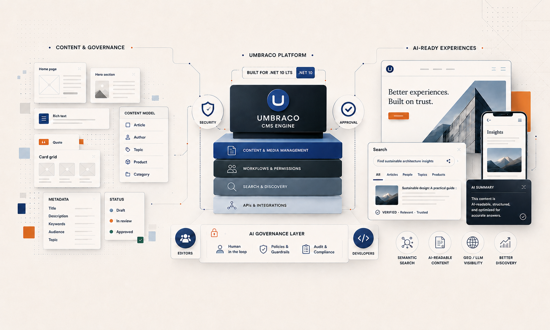
This elevates the importance of content models and clearly defined relationships between products, services and information.
For the Australian Building Codes Board, our work combined audience research, a structured resource library and layered search filters. This helped organise complex material around the needs of practitioners and consumers.
That work illustrates an important foundation. Information needs a clear structure beneath the interface, as well as useful navigation on the surface.
Our work with Intium extends this into AI discovery. We combined technical search improvements with service-led content architecture, schema markup and content structured for answer extraction.
Over six months, its ranking keyword footprint grew from 17 to 281. This demonstrates the value of addressing content and technical foundations together, while treating AI visibility as something to measure.
Designing for intent, not just journeys
Traditional UX design often maps journeys from discovery through to conversion. AI-mediated interactions can bypass stages of those journeys.
A customer might ask an assistant to compare health insurance policies or assess eligibility without first visiting a provider’s website.
Designers therefore need to understand the underlying intentions and outcomes customers are trying to achieve, alongside the routes they take.
For Teachers Health, we simplified quoting through a “needs statement” tool. Customers entered their circumstances and reasons for considering insurance, then received a personalised quote they could adjust in real time.
The wider programme of research, redesign and ongoing optimisation doubled conversion rates and delivered a 165% increase in new customer sign-ups.
The relevance to Machine Customers lies in the design principle: understand the customer’s circumstances, identify the information required and make the outcome achievable. Supporting an authorised agent would require those same rules and capabilities to be accessible beyond the visual interface.
Design systems become experience systems
Design systems provide reusable visual components and interaction patterns. Increasingly, these need to connect with structured content, consistent data models and clearly defined functionality.
The objective is to deliver reliable information and services across websites, applications, conversational interfaces and AI agents.
For Adelaide Airport, we brought three websites onto a shared platform, supported by a unified design system and centralised content publishing. Modular components and reusable templates helped maintain consistency while allowing each website its own identity.
This illustrates how design and publishing foundations can work together across an ecosystem. Extending that thinking to machine audiences means considering how the underlying information can also be accessed and interpreted outside those templates.
Conversational interactions become part of UX
Conversational interfaces allow people to express their needs directly, rather than translate them into menus and filters.
This creates opportunities for conversational search, guided services and intelligent recommendations. It also requires careful design of clarification questions, error handling and transitions to human assistance.
Our work, developing a chatbot for NSW Fair Trading shows how much detail this involves. We analysed three years of call centre transcripts, mapped rental bond conversations and tested the prototype with users.
One revealing finding was that people thanked the chatbot, interrupting the expected conversation flow. We adjusted the experience to accommodate that behaviour.
More than 85% of test users said the prototype contributed to a more positive website experience. The lesson remains relevant: conversational design needs research and testing that account for how people actually communicate.
Does Visual Design Become Less Important?
Its role is evolving.
When an AI assistant researches products or services, a website’s appearance may have limited direct influence on what it retrieves. The clarity, accessibility and reliability of the underlying information become critical.
When a person enters the experience, visual design still helps establish trust, communicate brand value and support decisions.
Adelaide Airport demonstrates that continuing importance. Field research informed clearer traveller journeys, while accessible typography, colour contrast and sensory maps supported people using the airport.
Designing for machine access adds another responsibility to that work. It expands the experience we need to consider.
A New Approach to Design Effectiveness
At Deepend, we believe the next evolution of digital design requires three complementary dimensions:
- Experienced: Can humans easily navigate, understand and trust the experience?
- Understood: Can machines discover, interpret and accurately represent the information and services available?
- Actionable: Can humans and authorised AI agents successfully complete the tasks they set out to achieve?
These questions need to shape discovery, information architecture and experience design from the outset. They also need practical testing, from checking how information is represented to verifying permissions and successful task completion.
Our case studies demonstrate many of the foundations: understanding intent, organising complex information, connecting platforms and testing real interactions. Machine Customers require us to extend those disciplines to another audience.
The rise of Machine Customers demands an expansion of human-centred design.
The next generation of successful digital experiences will serve people directly, and through the machines acting on their behalf.






Frequently Asked Questions
1. What is human and machine experience design?
Human and machine experience design extends user-centred design to two audiences: people and the AI systems that act for them. It keeps the focus on human needs, behaviours and trust, while making information and services accessible, understandable and actionable for machines. That means designing content models, data and functionality that can be interpreted outside the visual interface, not just designing screens and journeys.
2. How is designing for AI agents different from traditional UX design?
Traditional UX design maps human journeys from discovery to conversion. AI agents may skip those journeys, reaching information through search results, structured data, APIs or browser interfaces. They cannot be assumed to follow prescribed paths or read visual hierarchy as people do. Designers therefore need to understand underlying customer intent and make rules, information and outcomes accessible beyond the page layout.
3. Does visual design still matter if AI assistants research products and services?
Yes, but its role is evolving. When an AI assistant researches options, appearance may have limited direct influence on what it retrieves, so clear, accessible and reliable information becomes critical. When a person enters the experience, visual design still builds trust, communicates brand value and supports decisions. Deepend's Adelaide Airport work shows this, combining field research with accessible typography, colour contrast and sensory maps.
4. How can organisations tell if a digital experience works for both people and machines?
Deepend frames this around three dimensions. Experienced asks whether people can easily navigate, understand and trust the experience. Understood asks whether machines can discover, interpret and accurately represent the information and services. Actionable asks whether people and authorised AI agents can complete their tasks. Each needs practical testing, from checking how information is represented to verifying permissions and successful task completion.
5. Why does information architecture matter for AI discovery?
AI systems need information that can be interpreted independently of the website interface. Well-defined content models and clear relationships between products, services and information make that possible. For Intium, Deepend combined technical search improvements with service-led content architecture, schema markup and answer-ready content. Over six months, Intium's ranking keyword footprint grew from 17 to 281.