

Building a compliant, user-centred digital platform for Victoria’s building and plumbing regulator

Deepend helped BPC consolidate multiple legacy digital experiences into a compliant Squiz website that improves content discoverability, navigation, accessibility and performance for consumers and practitioners.
Client: Victorian Building and Plumbing Commission (BPC)
Industry: Government
Services: Squiz CMS, Information Architecture, UX Design, UI, Design, Digital Strategy, Web Development, Analytics, Search Optimisation (SEO)
Target Audiences: Builders, Plumbers, Homeowners, Owner-builders, Self-builders, Surveyors, Building inspectors
Year: 2026
Overview
As new regulatory powers came into effect on 1 July 2026, BPC needed a digital platform that could bring multiple departments, legacy websites and more than a decade's worth of content into one clear, compliant and trusted experience.
Deepend researched, designed and built a new Squiz website to help consumers and practitioners understand their obligations, access services and find reliable information faster.
The Challenge
- Bring multiple building and plumbing functions into one clear digital experience under BPC’s new oversight role.
- Replace the existing Victorian Building Authority website while supporting the rollout of new powers, services and regulatory responsibilities.
- Review, restructure and migrate more than 10 years of complex content, tools and service information within an eight-month delivery window
The Opportunity
- Create a clearer, more useful public sector website that makes complex regulatory information easier to understand and navigate.
- Design a platform that supports distinct audience needs across homeowners, builders, plumbers, surveyors and inspectors.
- Combine research, information architecture, design, Squiz development and analytics to deliver a compliant, scalable platform aligned to BPC’s expanded remit.
1. Governance and compliance

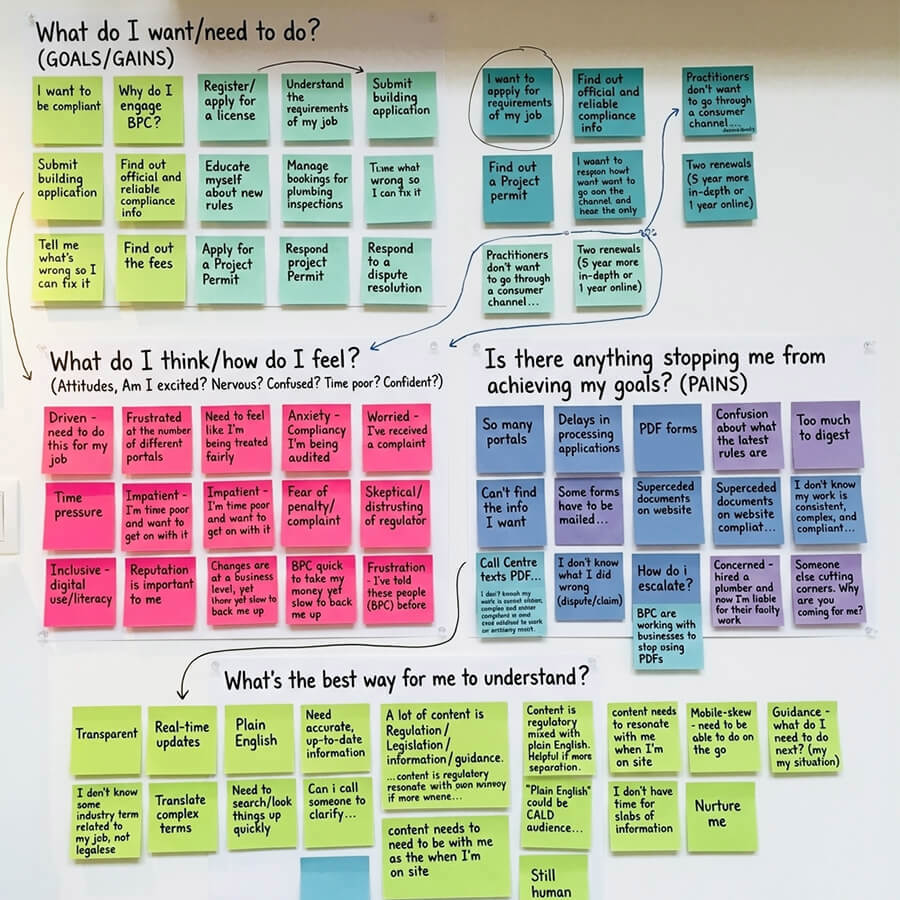
2. Research-led design

3. Hybrid delivery model

4. Launch-ready platform

Our Approach
Deepend worked with BPC and Squiz through a hybrid Agile and Waterfall delivery model. This allowed the team to move quickly while maintaining governance, compliance and collaboration. We used industry research, audience analysis, technical mapping, user testing, design systems and disciplined engineering to create a platform ready for a legally required launch date.


What We Delivered
- Industry research and insights.
- Journey maps and service blueprints.
- Technical landscape summary and integration map.
- UX research and user testing.
- Information architecture, sitemap and taxonomy.
- Wireframes and prototypes.
- Design concepts, UI designs and a 190-page UI Toolkit.
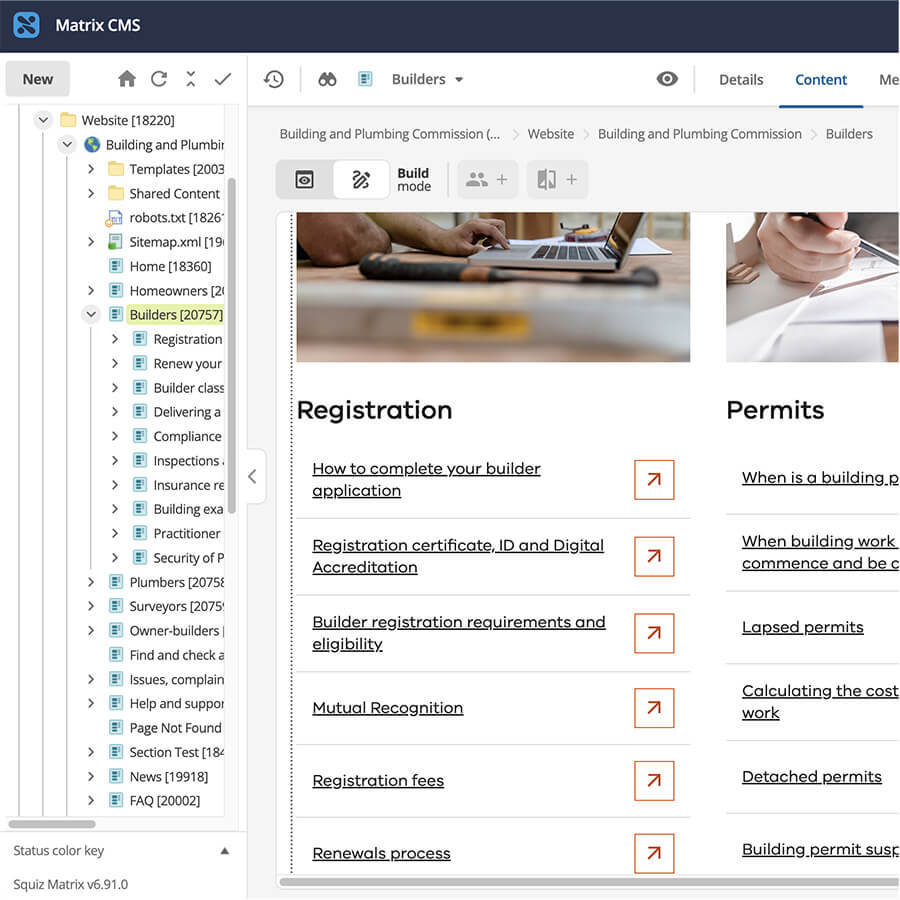
- Squiz DXP and Matrix CMS development.
- End-to-end browser and device testing.
- Accessibility improvements and AA compliance support.
- Google Tag Manager, Google Analytics, Search Console and Data Studio dashboards.
- User guide, documentation, staff training and post-launch hyper care.
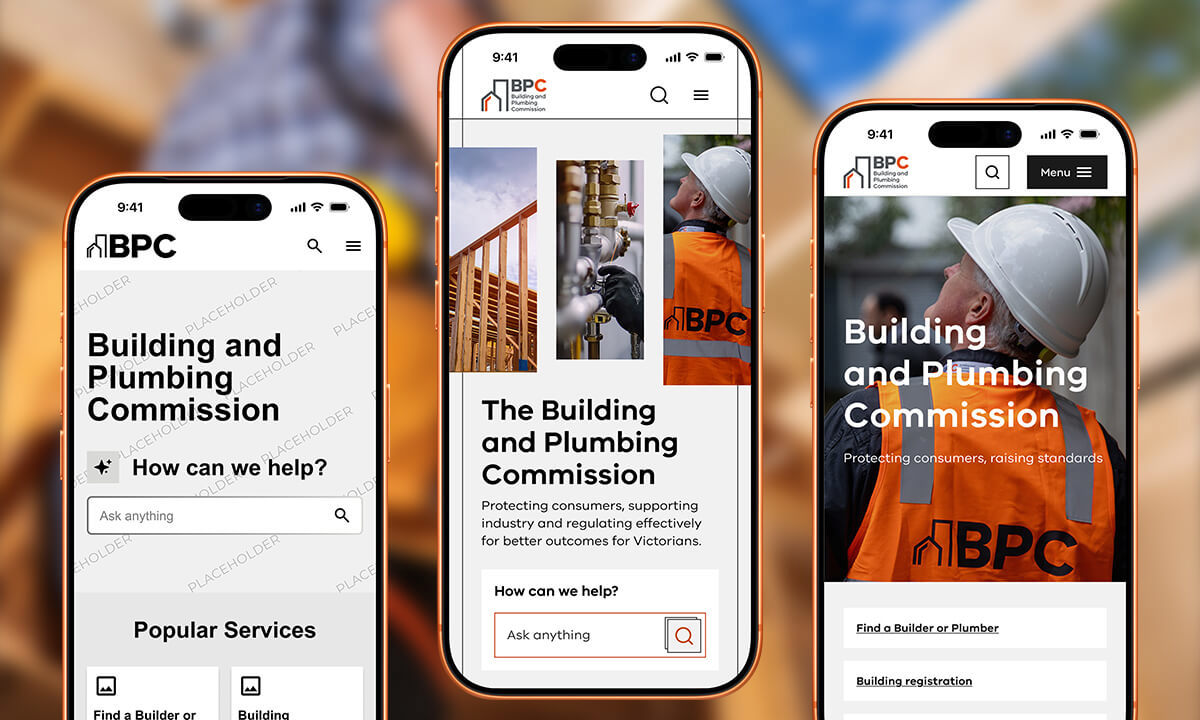
INSIGHTS AND USER-DRIVEN DESIGN
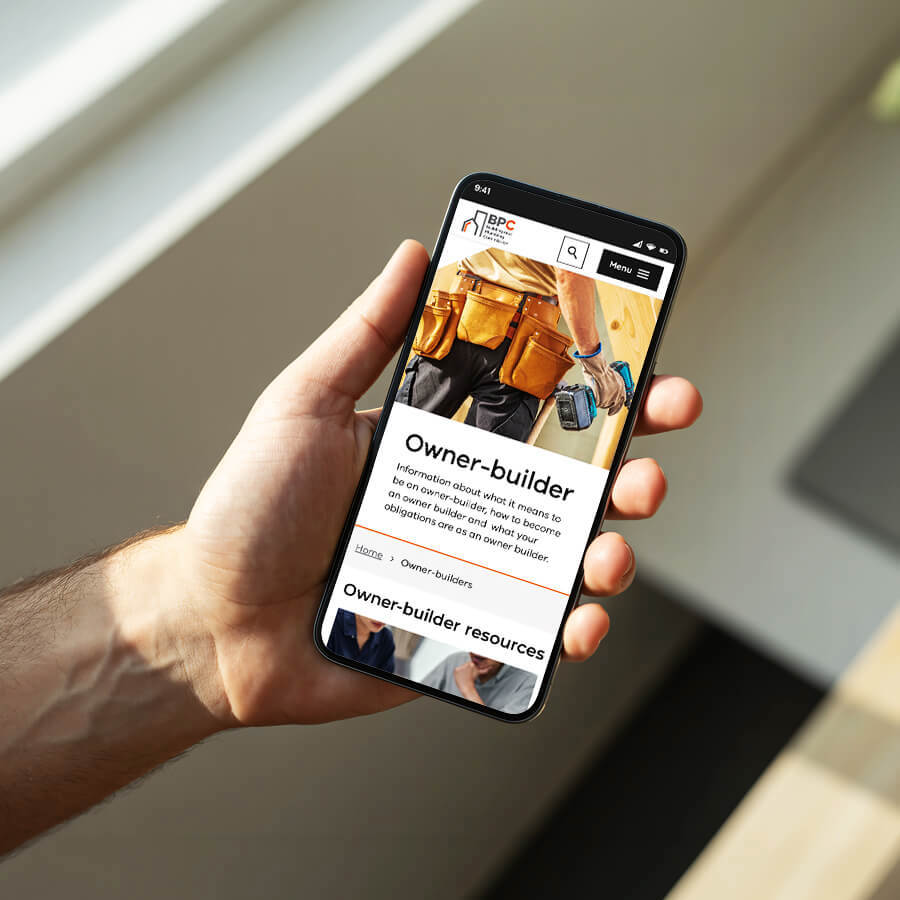
Strategic research informed a collaborative design process with BPC to develop wireframes, moodboards and design concepts that resulted in a UI solution that bridged the psychographic gap while improving usability and strengthening brand authority.
Impact

Active users
The number of active users on the BPC website increased by 9% post-launch.

New users
Incoming traffic to the website increased by up to 50%.

Tracking
The BPC website now has 50% more events and activities, allowing for richer data capture.

Performance
Improvements to the website resulted in users finding answers quicker than ever before.

Accessibility
The BPC website is now WCAG 2.2 AA compliant, creating a more inclusive web platform that can reach a greater audience.
Problem & Insight
BPC had to communicate a new regulatory role while serving several audiences with different needs. Homeowners needed clear, plain-language guidance. Builders, plumbers, owner-builders, surveyors and inspectors needed accurate service pathways, obligations and tools. Internal teams needed a maintainable platform that could support future content, reporting and service change.
The existing digital environment reflected years of growth across multiple departments and websites. Content had accumulated across more than a decade, creating complexity for users and operational effort for staff. To make the new regulator understandable, Deepend needed to simplify the experience without flattening the detail required by government, practitioners or consumers.
The central insight was that the website could not be treated as a content migration exercise. It needed to become a regulatory service platform: clear enough for consumers, specific enough for practitioners, and structured enough for search engines, analytics platforms and internal teams to understand.
Strategy & Experience Design
Deepend began by examining existing sites, audience needs and comparable regulatory experiences across other Australian states. This research helped identify the features, content structures and service pathways needed to create a best-practice public sector experience.
The team developed an extensive sitemap and taxonomy to help each audience find the information most relevant to them. Builders, plumbers, homeowners and other cohorts were given clearer pathways based on their intent, rather than being forced to understand BPC’s internal structure.
Analytics from the existing site informed design decisions. Mood boards, brand guidelines and user research were brought together in Figma to create concepts that felt authoritative, accessible and easy to navigate.
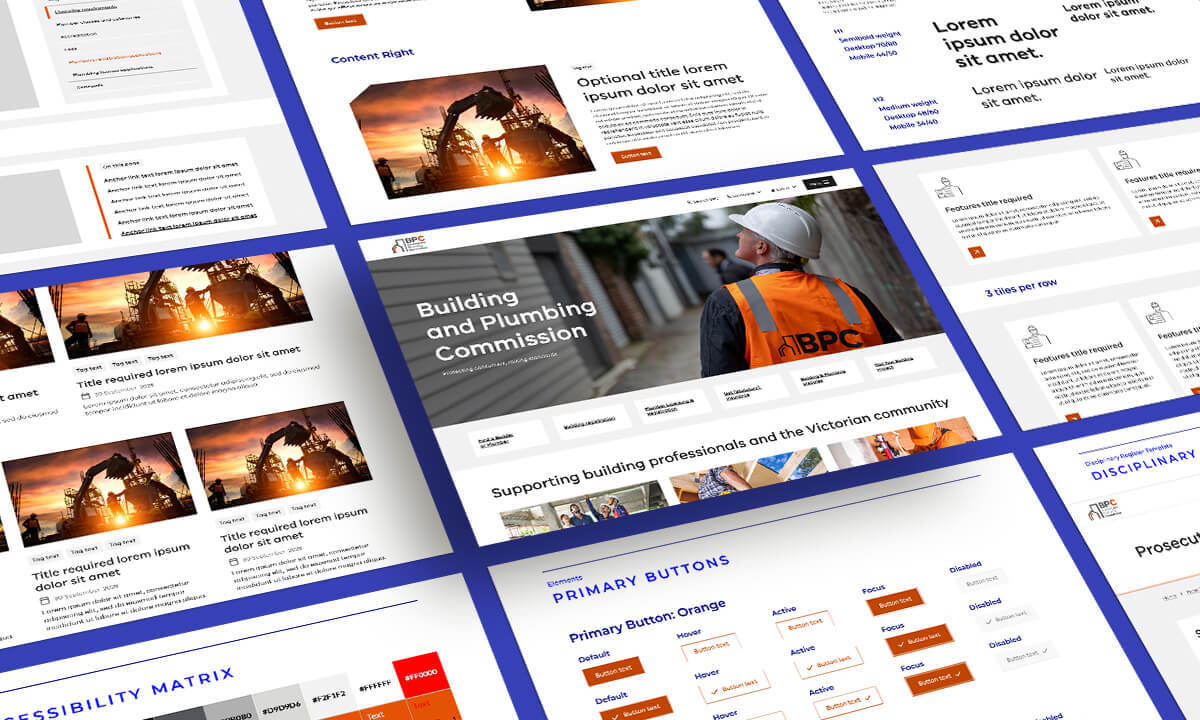
DOCUMENTATION AND TRAINING
A comprehensive UI Toolkit and CMS Documentation Hub established a shared design system, enabling consistent implementation, streamlined content migration and long-term scalability.
Technology & Delivery
The website was built on Squiz DXP and Matrix CMS. This platform was selected for its alignment with government compliance needs, support model and ability to deliver a robust, low-maintenance content management experience.
Deepend worked closely with BPC and Squiz to ensure the final solution matched the original brief while remaining practical for internal teams to manage. Delivery included integration mapping, development, testing, documentation, training and post-launch hyper care.
Security and compliance were treated as core delivery requirements. Penetration testing passed first time, reflecting the technical discipline applied throughout the build.
The site was also structured for search visibility and machine readability. Deepend optimised the experience for SEO and GEO by improving content structure, crawlability, page hierarchy and the way key information could be interpreted by both people and systems.
Performance measurement was embedded through Google Tag Manager and Google Analytics, with Data Studio dashboards used to help BPC monitor key moments, activities and service interactions.
Results
Deepend delivered a compliant, accessible and scalable government website that was ready three months earlier than planned. This gave BPC the runway needed to migrate and refine more than 1,000 content items before launch.
The website launched one day before the 1 July 2026 cut-over, supporting a legal requirement tied to BPC’s new powers.
Post-launch reporting showed an increase in active users, a 50% uplift in new users and 50% more tracked events and activities. This gave BPC a stronger foundation for ongoing measurement, content optimisation and service improvement.
The project also created a clearer experience for consumers and practitioners. Users could access relevant information faster, while BPC gained a more maintainable platform, stronger analytics and a design system that could support future change.





-

2024
Best in Class for Digital Design - Software & Apps
Sound Storm
-
2023
Digital Design - Apps & Software
ReachOut PeerChat
-

2023
Winner - Interact
ReachOut - PeerChat
-
2022
Digital Design - Web design & development
Royal Flying Doctor Service
-
2022
Digital Design - Web design & Development
Active Super
-

2022
Finalist for Digital Transformation Consultancy
B & T