

Building a Lean, Secure Platform Ecosystem for TEEG

Deepend built a multi-brand Umbraco and Cloudflare platform for TEEG that achieved 50%+ infrastructure cost reduction, 30% lower ongoing development costs and 100% uptime over approximately 18 months
Client: TEEG
Industry: Entertainment, Leisure, Family Entertainment
Services: Intelligent Platforms & AI Systems; Digital Transformation & Strategy; Content, Visibility and Analytics
Target Audiences: Multi-brand organisations that need scalable websites, centralised infrastructure and local brand flexibility across regions and languages.
Year: 2024 - 2026
“Deepend have been our key partner in developing our brand websites. All our websites are built using Umbraco CMS and Deepend have been instrumental in working with our in-house UI designers to seamlessly transfer our vision into high performing, attractive and functional sites. They pay close attention to the backend infrastructure ensuring that it is scalable and optimally tuned.”
Nakul Bhagwan - Senior Delivery Manager at TEEG
Overview
The Entertainment and Education Group, otherwise know as TEEG, is one of the largest Family Entertainment firms in the world, with over 324 Entertainment centres across the Asia Pacific Region. Their brief was to develop a new web platform for their flagship Kingpin brand, which could then be adapted across their portfolio, including AMF Bowling and Timezone.
With site stability and customer data security as key priorities, TEEG aimed to redevelop its customer-facing technology platforms to reduce the risk of threats and incursions while engineering a platform that is highly redundant and highly secure.
The platform needed to be adaptable to the varying functional requirements across the TEEG suite of brands, taking into account not only brand and design related adjustments but also multiple languages to support TEEG’s extensive footprint across Asia.
Deepend combined a shared design system with a multi-tenant Umbraco architecture, Cloudflare delivery and automated static publishing. The result was a leaner platform that reduced database dependency and simplified self-service publishing for content teams.
The Challenge
- TEEG needed a new customer-facing platform for its flagship Kingpin brand that could scale across a wider portfolio, including multiple brands, regions and languages. Stability, customer data security and resilience were core requirements.
The Opportunity
- A shared platform and common code base could reduce duplicated development while giving each brand enough flexibility to maintain its own identity and functional requirements.

Collaborative Design System
The TEEG and Deepend Design teams collaborated to implement an overhauled design system focused on delivering premium experience online. Careful consideration was given to the language used for key call-to-action such as "Let’s Play" encouraging users to proceed with booking while maintaining the brand's tone of voice.

Streamlining design
The initial design system developed for the premium Kingpin brand was adapted across the suite of TEEG brands, including Timezone and Zone Bowling, providing substantial efficiencies across the roll-out of each instance.
What We Delivered
- Multi-brand platform strategy
- Collaborative design system
- Multi-tenant Umbraco architecture
- Cloudflare CDN delivery
- Static site publishing model
- Self-service deployment workflow
- Automated content republishing
- Responsive image processing
- Common code base
- Multi-language capability
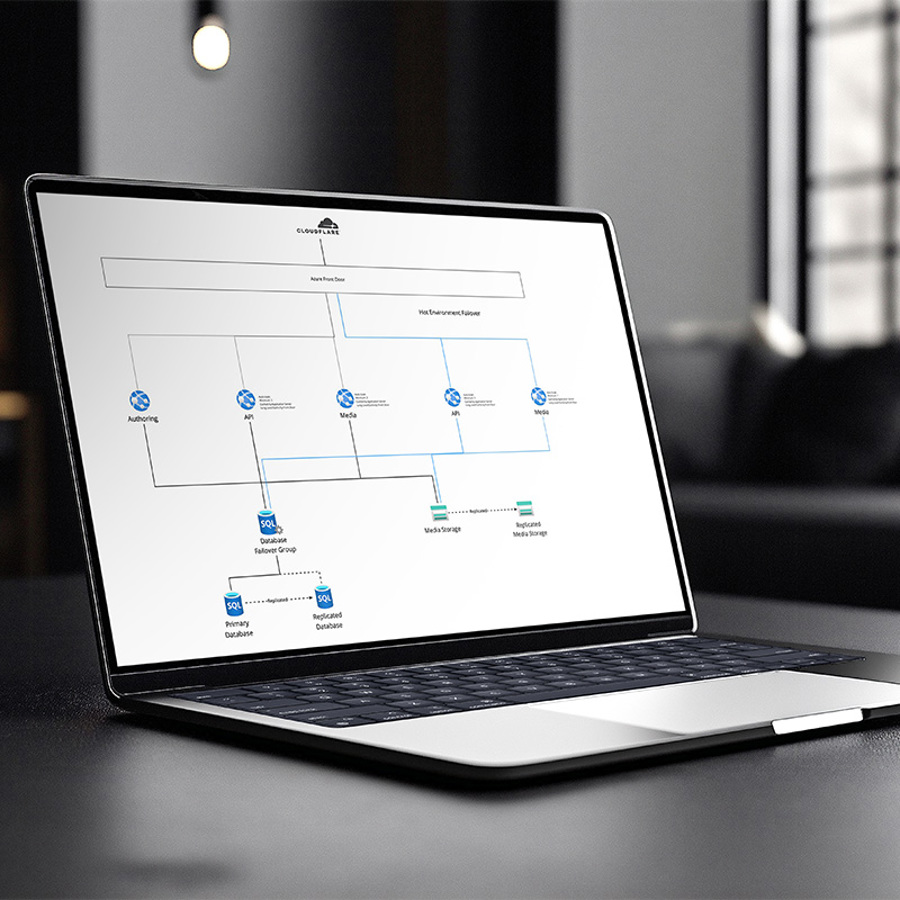
- Security and redundancy architecture
Impact
- 50%+ reduction in infrastructure load costs
- 30% reduction in ongoing development costs
- 100% uptime across approximately 18 months
- Reduced publishing resource through automation
- Faster rollout across multiple TEEG brands
- Improved resilience through Cloudflare CDN and static delivery

Problem & Insight
TEEG needed to scale digital delivery across a diverse brand portfolio without multiplying hosting, code and publishing overhead. The platform also had to remain highly available and secure across a large Asia Pacific footprint.
Strategy & Experience Design
Deepend and TEEG collaborated on a design system first developed for Kingpin, then adapted across other brands. Shared patterns created efficiency while preserving tone of voice, brand expression and local variation.
Technology & Delivery
The platform combined Umbraco with Cloudflare and a static publishing model. Pages were deployed to Blob storage and served through Cloudflare’s CDN, reducing reliance on dynamic database calls and simplifying hosting infrastructure.
Automation allowed content editors to initiate builds and deployments directly from Umbraco. Republishing a shared library item automatically rebuilt every page using that item, while image processing supported responsive asset delivery.
Results
The platform reduced infrastructure costs by more than 50% and ongoing development costs by 30%. Across the reported 18-month period, the platform achieved 100% uptime while giving TEEG a reusable foundation for multiple brands.
Frequently Asked Questions
How did Deepend reduce TEEG’s platform infrastructure costs?
Deepend combined Umbraco, Cloudflare, static publishing and Blob storage to reduce the infrastructure required to serve TEEG’s websites. The live case study reports a 50%+ reduction in infrastructure load costs.
How did TEEG reduce ongoing website development costs?
A common code base, shared modules and a multi-tenant Umbraco instance reduced duplicated development across brands. The live case study reports a 30% reduction in ongoing development costs.
How did the TEEG platform achieve 100% uptime?
The sites were statically published and served through Cloudflare’s CDN, reducing dependency on live CMS and database infrastructure. TEEG reported 100% uptime across approximately 18 months.
How does the TEEG platform support multiple brands?
The initial design system and platform created for Kingpin were adapted across brands including Timezone and Zone Bowling, allowing shared infrastructure while preserving different brand experiences.
How did Deepend simplify content publishing for TEEG?
Deepend created self-service publishing and automated rebuild workflows in Umbraco. When shared content was republished, the platform automatically rebuilt affected static pages without requiring additional technical support.








-

2026
Winner Web Design and Development
Adelaide Airport
-
2024
Best in Class for Digital Design - Software & Apps
Sound Storm
-
2023
Digital Design - Apps & Software
ReachOut PeerChat
-

2023
Winner - Interact
ReachOut - PeerChat
-
2022
Digital Design - Web design & development
Royal Flying Doctor Service
-
2022
Digital Design - Web design & Development
Active Super
-

2022
Finalist for Digital Transformation Consultancy
B & T
Frequently Asked Questions
1. What did Deepend build for TEEG?
Deepend built a multi-brand digital platform using Umbraco and Cloudflare, initially for Kingpin and then adapted across brands including Timezone and Zone Bowling. The shared platform supports multiple regions, languages and brand experiences from a common technical foundation.
2. How did Deepend reduce TEEG’s infrastructure and development costs?
Deepend combined a multi-tenant Umbraco architecture, common code base, static publishing and Cloudflare CDN delivery. This reduced infrastructure load costs by more than 50% and ongoing development costs by 30%.
3. How does the TEEG platform support multiple brands?
The platform uses a shared design system, reusable modules and common code base that can be adapted for different brand identities, functional requirements, regions and languages. This allows TEEG to scale new brand sites without rebuilding the platform from scratch.
4. How did Deepend improve website reliability for TEEG?
Deepend used static publishing, Blob storage and Cloudflare CDN delivery to reduce reliance on live CMS and database infrastructure. The platform achieved 100% uptime across the reported 18-month period.
5. How does self-service publishing work on the TEEG platform?
Content editors can initiate builds and deployments directly from Umbraco without relying on technical teams. Automated workflows also rebuild affected pages when shared content changes, helping reduce publishing effort and improve efficiency.